I'm Eren.
Here's who I actually am.
My CV lists companies, titles and metrics. This page is different: how I think, what I believe about leadership, and the executive I've become over nineteen years.
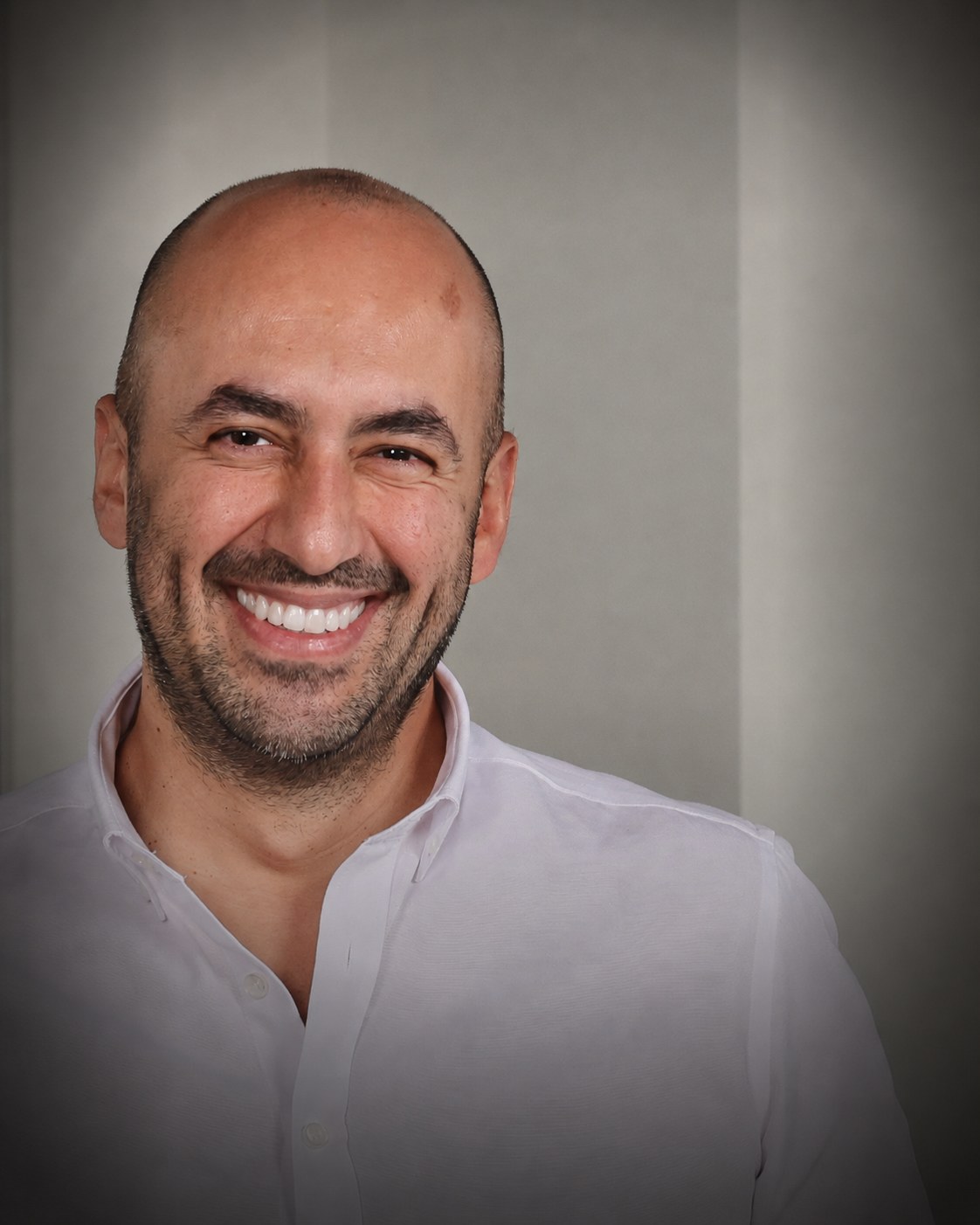
A builder who happens to run businesses.
I grew up professionally in the trenches of marketing and growth, which taught me early that titles mean nothing without results. Every role I've held, I've treated as a mandate: a specific set of problems to solve, in a specific window of time.
Istanbul-based and Turkish, I've spent almost my whole career in the digital economy: fintech, crypto, gaming, consumer electronics. What connects the work isn't the sector; it's the pattern. Fast-moving companies with big ambitions and structural gaps holding them back. I close those gaps.
My operating theory: most business failures aren't strategic failures, they're alignment failures. Strategy, operations, compliance and people pulling in different directions. I've spent nineteen years learning to pull all four the same way.
The rarest executive skill is holding strategy and execution in the same hand, at the same time.
Six patterns that define my day-to-day.
Long-horizon thinking.
Suspicious of quick wins that create future problems. I decide with a 3–5 year frame in mind, even when the board only wants to see next quarter.
Systems over heroics.
I don't believe in executives who save the day. I build systems that don't need saving. If I'm indispensable, I've failed.
Radical clarity.
Ambiguity is expensive. I drive meetings to decisions, not discussions. Everyone leaves knowing what was decided, who owns it, and by when.
People-first, not people-pleasing.
I invest heavily in the people I work with, but I won't confuse investment with avoidance. Honest feedback and accountability are forms of respect.
Data pressure-tests intuition.
I have strong intuitions and I trust them. Every major call still gets tested against the numbers. Intuition tells me where to look; data tells me whether to move.
Velocity with discipline.
Fast companies can move in the wrong direction efficiently. I push for speed, and insist on knowing exactly where we're going before we accelerate.
Five things I've learned the hard way.
- On culture
Culture is an operating system, not a poster.
People don't read the values deck. They watch what gets rewarded and what gets tolerated. Every day, culture is either built or eroded by decisions at the top.
- On compliance
A clean audit is a competitive advantage.
In payments, fintech and crypto, most operators treat compliance as a cost. Companies that internalise regulatory frameworks build trust competitors can't replicate overnight. Passing audits cleanly isn't luck; it's infrastructure built over years.
- On growth
Growth only counts if it makes money.
I'm allergic to growth at all costs. Too many companies hit impressive revenue on the way to bankruptcy. If unit economics aren't improving as you scale, you're building a louder problem, not a better business.
- On operations
Everyone sees the same numbers.
I build companies where every unit talks to the others, KPIs are clear, and the company goal is known by everyone. When everything is visible, teams work in harmony without being told.
- On hiring
Hire for character, and for skill.
Character is non-negotiable and can't be trained. But in payments infrastructure, compliance or product architecture, you can't coach your way to competence fast enough. The best teams I've built had both.
Things that keep me whole.
Executives with no life outside work eventually stop being effective inside it.
Family
Non-negotiable. Being present as a father and partner shapes everything else.
Gym
Where I do my clearest thinking. Physical effort sharpens focus and manages stress like nothing else.
Motorbiking
You can't multitask on a bike. Enforced presence is the best reset I know, and Istanbul traffic is best on two wheels.
Camping
Distance from screens and schedules resets my sense of proportion. Most urgent problems turn out to be merely loud.
Travel
Seeing different markets and ways of doing business is the most underrated form of executive education.
DIY projects
Building with your hands is grounding. Most problems, given the right tools, are solvable.
The mandates I find energising.
I do my best work where a company has proven something and now needs to scale it; where leadership is aligned and needs operational firepower; and where there's a real appetite for honest feedback, not validation.
I'm particularly energised by regulated industries where compliance and commercial growth are seen as opposing forces. They don't have to be. Most of my career has been proving that they reinforce each other.
I'm honest about fit. If a company needs someone to maintain the status quo, I'm not it. If it needs someone to build the next version of itself, that's exactly what I do.
If this resonates, let's talk.
A C-level role, a board seat, or a hard organisational problem to think through.